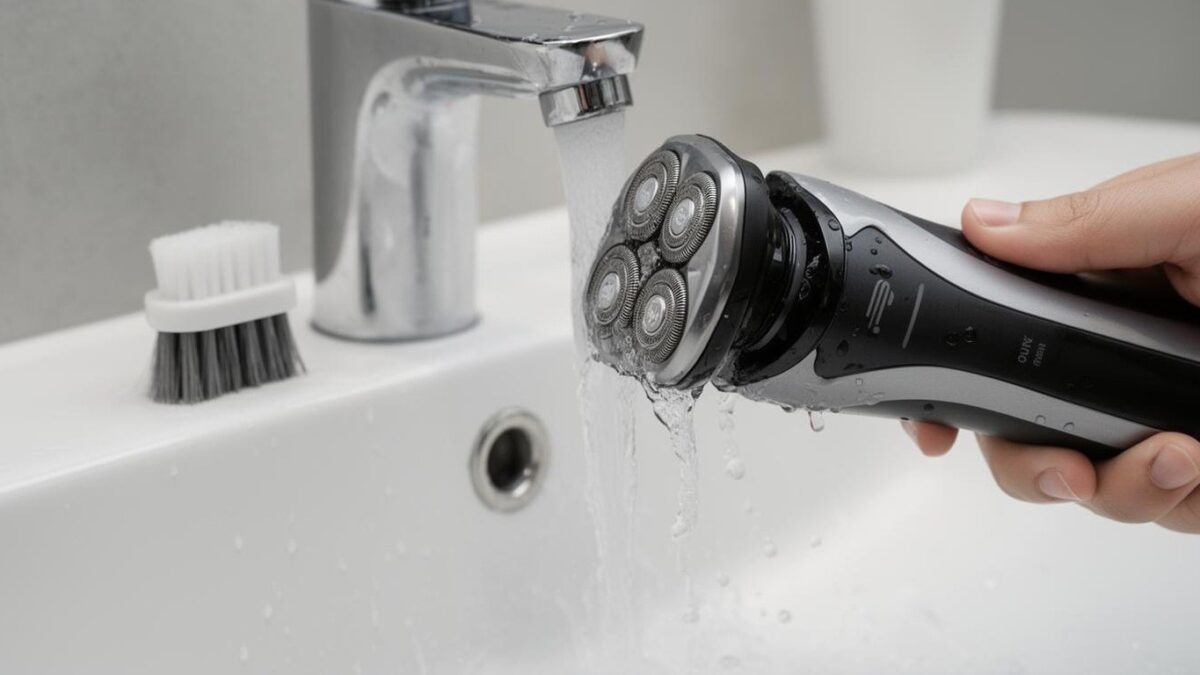

A beard trimmer is the tool that does more of the daily work than almost any other piece of grooming equipment. It sets the length, defines the neckline, tidies the cheek line and keeps a beard looking intentional rather than neglected. Yet most buyers choose a trimmer by its battery claim or the number of attachments on the box, and they discover the difference only after months of uneven lengths and tugging at the skin.
This guide explains what the blade width, the length settings and the battery life mean for everyday grooming, how to match a trimmer to the length of beard you keep and what to check before buying. It is about the tool and the technique of choosing it. For skin irritation, ingrown hairs or any condition on the face or neck, speak to a physician or dermatologist before changing your routine.
A man buys a trimmer for a full beard, then finds the longest guard leaves his stubble too short for the shape he wants. The guard length was the detail he had skipped.
Blade width and why it matters
The blade is the part of the trimmer that does the cutting, and its width determines how much hair is cut in one pass. A wider blade covers more area quickly, which suits large areas such as the cheeks and the back of the neck. A narrower blade gives more control in tight places such as the sideburns, the mustache and the outline of the beard.
Many trimmers have a wide main blade and a smaller detailing blade or a precision edge. If you keep a full beard, a wider blade saves time. If you keep a short stubble or a detailed line, precision matters more. Some men buy two trimmers for these two jobs, which is a sensible approach if the budget allows.

Length settings: how they work
Most trimmers use attachment combs or adjustable dials to set the cut length. A comb clips over the blade and lifts the hair away from the skin by a fixed amount, usually shown in millimeters or as a number. Adjustable dials change the distance between the blade and the skin, and some trimmers offer very short settings for a clean fade.
Check how many settings the trimmer offers and how evenly they spread across the range. A trimmer with a large gap between the shortest and the next setting makes precise work harder. Check whether the combs click on securely, since a loose comb can change the length mid-stroke.
Cordless runtime and charging
A cordless trimmer is convenient, but the battery is what limits how long it keeps going. Manufacturers list a run time, often in minutes, but that figure is measured under test conditions and does not reflect a thick beard on a demanding setting. Look for reviews that measure real use, and check how long the battery takes to charge.
Some trimmers can be used while plugged in, which removes the battery limit during a long session. Check the cord length and whether the trimmer is safe to use while charging, following the manual’s instructions. We do not give instructions for modifying batteries or chargers.
Matching the trimmer to your beard
The length you keep decides which features matter.
- Full beard, kept long: a wide blade, a good range of length combs and a strong motor help with density.
- Short beard or stubble: a precision blade and very short settings give a clean line.
- Detailed styling, with sharp lines: a detailing trimmer with a narrow, precise edge is worth having.
- Fast daily tidy-up: a simple trimmer with two or three combs may be all you need.
Think honestly about how often you will trim and how much time you have. A trimmer that is pleasant to use every morning will be used, and a complicated one that takes ten minutes to set up often goes unused.
Technique and skin comfort
Trim against the direction of growth only when you want a very short finish, and with the grain for a softer result. Move slowly, and let the blade do the work rather than pressing hard. Keep the skin taut with your free hand to avoid pulling. A sharp, clean blade cuts more smoothly and pulls less, which is why blade care matters. Our guide to blade care and cleaning explains how to maintain the cutting edges.
If you notice bumps, redness or ingrown hairs, reduce the pressure, shorten the length and let the skin rest. Persistent problems should be checked by a physician or dermatologist. We do not give medical advice for skin conditions.
Replacement parts and the real cost
Blades dull over time, and replacement blades have their own cost. Check how often the maker recommends replacing them and whether the combs are sold separately. A trimmer that is cheap to buy but requires expensive replacement blades can cost more over a few years than a better model with affordable parts.
Questions to ask before buying
- What width is the main blade, and is there a detailing blade?
- How many length settings are there, and how precise are they?
- What is the real-use runtime, according to independent reviews?
- Can the trimmer be used while charging?
- How much do replacement blades and combs cost?
- What is the warranty, and does it cover the blade?
Our guide to electric razor types covers the shaving side of the routine, and the guide to grooming kits as gifts explains what to include if you are buying a trimmer for someone else.
The short version
Blade width controls how much hair is cut per pass, and length settings control the finish. Choose a trimmer for the beard you keep, check the real battery runtime and the cost of replacement blades and keep the blade sharp and clean. Trim slowly, keep the skin taut and see a physician or dermatologist about any persistent irritation.
Trimmer questions
Do I need a trimmer with many guards?
Several guard lengths give flexibility. A few sensible lengths often cover most styles.
Are metal blades better than ceramic?
Blade material affects durability and feel. Check the maker’s guidance on the blade type and how to clean it.
Can a trimmer be used on the face?
Many trimmers can be used on the face, but check the manual, since some heads are designed only for body or beard use.